Bio-based construction materials are sustainable, renewable products derived from biomass—such as plants, agricultural waste, and forestry materials—used to reduce carbon emissions in construction. Read on, because interest in this topic is growing fast!
In Short:
-
Bio-based construction materials can reduce embodied carbon by up to 85% compared to traditional options, making them critical for meeting climate goals
-
Materials like hempcrete and mycelium insulation actively sequester carbon, creating buildings that serve as carbon sinks rather than carbon sources
-
Beyond sustainability, many bio-based alternatives offer superior thermal, acoustic, and moisture-regulation properties that improve building performance
-
The global market for sustainable construction materials is projected to reach $573 billion by 2030, indicating growing mainstream adoption
-
Flora Materials is pioneering innovative bio-based flooring solutions that match or exceed the performance of conventional materials while dramatically reducing environmental impact
The construction industry stands at a crossroads. As climate concerns intensify and regulations tighten, the materials we build with are undergoing a revolution. Bio-based construction materials—derived from renewable plant and animal sources—are emerging as the most promising pathway to truly sustainable buildings. At Flora Materials, we've seen firsthand how these innovative materials are transforming projects from carbon-intensive liabilities into regenerative assets for our planet.
Traditional construction has relied on a handful of carbon-intensive materials for far too long. The good news? We now have viable, high-performing alternatives that dramatically reduce environmental impact while creating healthier spaces. This comprehensive guide explores the essential bio-based options available today, their performance benefits, and how to integrate them into your next project.
Quick Guide: Bio-based Building Revolution

"Green Construction Revolution ..." from www.youtube.com and used with no modifications.
Bio-based building materials represent a fundamental shift in construction philosophy. Instead of extracting finite resources through destructive processes, these materials leverage natural growth cycles to create renewable building components. They include everything from structural elements like mass timber to insulation materials derived from hemp, mushrooms, and agricultural waste. The core principle is simple but powerful: use materials that grow rather than those that must be mined or synthesized from fossil fuels.
The market for these sustainable alternatives is expanding rapidly, with innovations occurring at an unprecedented pace. What began as niche products championed by eco-conscious builders has evolved into commercially viable options being adopted by major developers and specified by leading architecture firms. This shift isn't just good for the planet—it's increasingly making financial sense as carbon taxes, embodied carbon regulations, and consumer preferences reshape the economics of construction.
Why Traditional Construction Materials Are Killing Our Planet
"Built Environment ..." from www.eesi.org and used with no modifications.
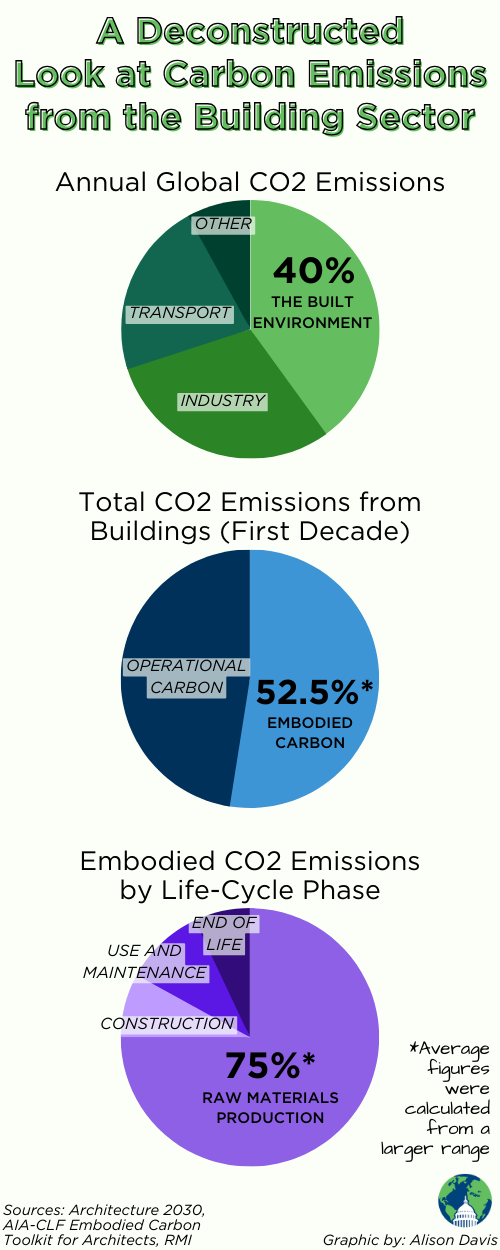
The environmental toll of conventional building materials can no longer be ignored. The production of Portland cement—just one component of concrete—is responsible for approximately 8% of global carbon emissions, more than the entire aviation industry. Steel manufacturing generates nearly 2 tons of CO₂ for every ton produced. Synthetic insulations and finishes often contain toxic chemicals that persist in the environment for centuries. Together, these materials have created a construction sector that accounts for nearly 40% of global carbon emissions when both operational and embodied carbon are considered.
Beyond climate impacts, traditional materials deplete finite resources at unsustainable rates. Sand suitable for concrete is becoming scarce in many regions, leading to destructive extraction practices. Petroleum-based products release volatile organic compounds (VOCs) that compromise indoor air quality for decades after installation. The disposal of these materials creates massive waste streams, with construction and demolition debris accounting for roughly one-third of all waste in landfills. For more information on sustainable alternatives, explore this introduction to bio-based materials.
The Concrete Problem: 8% of Global Carbon Emissions
Concrete has become the most widely used building material on Earth, with over 30 billion tons produced annually. Its carbon footprint stems primarily from cement production, which requires heating limestone to extremely high temperatures, releasing CO₂ both from the fuel used and from the chemical reaction itself. Despite incremental improvements in manufacturing efficiency, concrete remains fundamentally problematic from a carbon perspective. For every ton of cement produced, approximately one ton of CO₂ is released into the atmosphere.
The scale of this problem is staggering. If the cement industry were a country, it would rank third in emissions behind only China and the United States. While concrete provides valuable structural properties and durability, its continued use at current levels is incompatible with climate stabilization goals. Bio-based alternatives that can replace concrete in specific applications represent one of our most promising pathways to decarbonization in the built environment.
Even more concerning is concrete's growing footprint as developing nations build out infrastructure. Global cement production is projected to increase by 12-23% by 2050 unless alternative materials gain significant market share. This trajectory would make meeting international climate commitments virtually impossible, highlighting the urgent need for viable substitutes.
Toxic Building Materials and Indoor Air Quality Crisis
Beyond their environmental impact, many conventional building materials introduce toxic substances into our living and working environments. Synthetic carpets, vinyl flooring, and particleboard furniture can off-gas formaldehyde and other VOCs for years after installation. Flame retardants in insulation materials have been linked to hormone disruption and neurological issues. Adhesives, sealants, and paints often contain solvents that contribute to respiratory problems and other health concerns.
The consequences are far-reaching. Americans spend approximately 90% of their time indoors, where air quality can be 2-5 times worse than outdoor air. This poor indoor air quality has been linked to decreased cognitive function, productivity losses, and a range of health problems from allergies to more serious conditions. The World Health Organization now recognizes indoor air pollution as a major environmental health risk, with building materials being a primary contributor.
What Makes Bio-based Materials Different
Bio-based construction materials fundamentally differ from conventional options in their relationship with the carbon cycle. While traditional materials typically add carbon to the atmosphere during production, many bio-based alternatives actively remove CO₂ during their growth phase. Plants absorb carbon dioxide through photosynthesis, incorporating it into their cellular structure. When these plants are harvested and transformed into building materials, this carbon remains sequestered for the lifetime of the building. Flora Materials has pioneered flooring solutions that leverage this natural carbon capture to create truly sustainable building products.
Another key distinction is renewability. The raw materials for bio-based products regenerate within human timescales—often annually for agricultural crops like hemp or bamboo, or within decades for managed forestry products. This contrasts sharply with the millions of years required to form fossil fuels or mineral deposits. This renewability provides a path to truly sustainable resource management that works within planetary boundaries rather than depleting finite resources.
Renewable vs. Finite Resources
The fundamental advantage of bio-based materials lies in their renewable nature. While conventional construction relies heavily on extracted resources that took millions of years to form—like petroleum for plastics or iron ore for steel—bio-based alternatives utilize materials that regenerate within human timescales. Hemp grows to maturity in just 3-4 months, while sustainable forestry practices ensure new trees replace those harvested for timber products.
This renewable quality creates a circular material economy that contrasts sharply with the linear extract-use-dispose model of conventional construction. Rather than depleting resources with each building constructed, bio-based materials participate in natural growth cycles that can continue indefinitely with proper management. The regenerative capacity varies by material—bamboo can be harvested every 3-5 years, while sustainable forestry typically operates on 20-60 year cycles depending on species and region.
Resource Comparison: Bio-based vs. Conventional Materials
When comparing resource cycles, the contrast is striking: A hemp field can produce three harvests annually in some climates, while the petroleum used for vinyl flooring represents millions of years of stored solar energy extracted in a single use. Even metals like aluminum, which are technically recyclable, require enormous energy inputs for both virgin production and recycling processes.
Carbon Storage Potential
Perhaps the most revolutionary aspect of bio-based materials is their ability to store atmospheric carbon dioxide within the building structure itself. Plants naturally sequester carbon during growth, converting CO₂ to solid carbon compounds through photosynthesis. When these plants are harvested and processed into building materials, the carbon remains locked away for the entire lifespan of the building—often decades or even centuries. For more information on this topic, you can explore this article on bio-based materials.
The carbon storage capacity varies significantly between materials. Wood products store approximately 1 ton of carbon dioxide per cubic meter of material. Hempcrete can sequester up to 330 kg of CO₂ per cubic meter when accounting for both the hemp and lime components. Even more impressive, some mycelium-based materials can store carbon equivalent to 3-4 times their weight, making buildings actual carbon sinks rather than sources of emissions.
This stored carbon represents a tangible climate benefit that completely reverses the traditional relationship between buildings and carbon emissions. Rather than viewing construction as an inherently carbon-intensive activity, bio-based buildings can actively contribute to climate solutions by functioning as long-term carbon repositories. At Flora Materials, our flooring solutions leverage this natural carbon sequestration to create products with dramatically lower carbon footprints than conventional alternatives.
Biodegradable End-of-Life Solutions
The final stage in the material lifecycle often receives insufficient attention in sustainability discussions. When buildings reach the end of their useful life, conventional materials typically create massive waste streams destined for landfills. Bio-based materials offer a fundamentally different path, with many being fully biodegradable or compostable. Materials like straw bale, hempcrete, and mycelium composites can return to the soil without leaving toxic residues or persistent waste.
This biodegradability enables truly circular material cycles that align with natural processes. Rather than accumulating in landfills or requiring energy-intensive recycling, these materials can become nutrients for the next generation of plant growth. This creates a closed-loop system where today's building could become tomorrow's growing medium for new bio-based materials.
6 Bio-based Materials Transforming Construction Today
The bio-based materials revolution is well underway, with several options already proving their value in real-world applications. These materials range from structural elements to insulation and finishes, offering comprehensive alternatives to conventional building systems. While each has specific applications and performance characteristics, together they represent a toolkit for dramatically reducing the environmental impact of construction without sacrificing quality or durability.
1. Mass Timber: The Skyscraper Game-Changer
Mass timber has emerged as one of the most transformative bio-based building materials of the 21st century. This category includes cross-laminated timber (CLT), glue-laminated timber (glulam), nail-laminated timber, and dowel-laminated timber—all engineered wood products that offer structural performance comparable to concrete and steel. CLT panels, created by layering wood boards perpendicular to each other and binding them with structural adhesives, can be used for walls, floors, and roofs in buildings up to 18 stories tall.
The environmental benefits are substantial. Mass timber structures typically have 25-45% lower embodied carbon than equivalent concrete buildings. A cubic meter of CLT stores approximately one ton of carbon dioxide while avoiding the emissions associated with concrete production. Projects like Brock Commons at the University of British Columbia (18 stories) and Mjøstårnet in Norway (18 stories) demonstrate that timber can successfully replace concrete and steel even in tall buildings.
Beyond carbon benefits, mass timber offers accelerated construction timelines due to prefabrication, improved thermal performance, and biophilic design elements that enhance occupant wellbeing. The exposed wood surfaces create warm, aesthetically pleasing environments that connect occupants to natural materials. Studies have shown that visible wood in interiors reduces stress and improves concentration—benefits that extend beyond environmental considerations.
2. Hempcrete: Carbon-Negative Insulation
Hempcrete combines hemp hurds (the woody core of the hemp plant) with a lime-based binder to create a lightweight, insulating material that can be cast into walls or formed into blocks. Unlike conventional insulation, hempcrete is a monolithic material that provides structure, insulation, and thermal mass in a single component. Its R-value ranges from R-2.1 to R-2.5 per inch, making it comparable to many conventional insulations.
The carbon profile of hempcrete is particularly impressive. Hemp plants sequester significant carbon during growth, and the lime carbonation process absorbs additional CO₂ over time. The result is a truly carbon-negative material—one that removes more carbon from the atmosphere than it emits during production. A typical hempcrete wall can store 110-165 kg of CO₂ per cubic meter, providing significant climate benefits beyond just avoiding the emissions of conventional materials.
Hempcrete also excels at moisture management, maintaining a healthy relative humidity between 40-60% in interior spaces. Its hygroscopic nature allows it to absorb and release moisture without degradation, preventing mold growth and maintaining air quality. With proper detailing, hempcrete walls can last centuries, as evidenced by similar lime-hemp buildings in Europe dating back hundreds of years.
3. Mycelium: Fungi-Based Building Blocks
Perhaps the most innovative bio-based material gaining traction is mycelium—the root structure of fungi. When combined with agricultural waste like corn stalks or hemp hurds, mycelium grows through the substrate, binding it together into a solid material. After a growth period of just 5-10 days, the material is dried to halt the biological processes, resulting in a lightweight, fire-resistant material with excellent insulative and acoustic properties.
Mycelium composites can be grown into specific shapes using molds or formed into blocks and panels for construction. Companies like Ecovative Design have pioneered mycelium packaging materials, while architectural applications are rapidly developing. Current applications focus on non-structural elements like acoustic panels, insulation, and interior partitions, though research into structural applications continues.
The environmental footprint of mycelium materials is minimal. They grow at room temperature with little energy input, use agricultural waste as their primary feedstock, and are fully compostable at end of life. Some mycelium products have achieved fire ratings comparable to conventional insulation materials without the need for toxic flame retardants, highlighting their potential as truly sustainable building components.
4. Bamboo: Structural Strength with Rapid Renewability
Bamboo represents one of nature's most remarkable structural materials, with a tensile strength comparable to steel and a compressive strength that exceeds many concrete formulations. As the fastest-growing woody plant on Earth, some bamboo species can grow up to 91 cm (3 feet) in a single day, reaching harvest maturity in just 3-5 years compared to decades for conventional timber.
Modern processing techniques have transformed traditional bamboo applications into sophisticated engineered products. Laminated bamboo lumber consists of strips of bamboo bonded together to create dimensionally stable beams and panels. These products maintain bamboo's impressive strength-to-weight ratio while addressing traditional limitations like irregular dimensions and natural decay. Bamboo flooring, structural panels, and even reinforcement for concrete demonstrate the versatility of this remarkable material.
Bamboo's rapid growth cycle translates to exceptional carbon sequestration capacity. Bamboo forests can capture 30-40% more carbon than equivalent hardwood forests. When harvested and transformed into durable building products, this carbon remains stored for the lifetime of the structure. Additionally, bamboo's extensive root system remains intact after harvest, preventing soil erosion and continuing to store carbon while new shoots emerge.
5. Straw Bale: Ancient Technique Meets Modern Efficiency
Straw bale construction represents a perfect example of traditional wisdom finding new relevance in sustainable building. Using compressed bales of agricultural waste—typically wheat, rice, or oat straw—this technique creates super-insulated walls with minimal environmental impact. Modern straw bale buildings combine these natural insulation blocks with structural systems ranging from timber frame to light clay techniques.
The thermal performance of straw bale walls is exceptional, with R-values ranging from R-30 to R-50 depending on bale orientation and wall thickness. This far exceeds conventional wall assemblies and can reduce heating and cooling demands by up to 75% compared to standard construction. When plastered with lime or earth-based renders, straw bale walls also provide excellent acoustic insulation and thermal mass that moderates temperature fluctuations.
From a sustainability perspective, straw bale construction transforms an agricultural byproduct—often burned in fields—into a valuable building material. Each bale sequesters approximately 60 pounds of carbon, and a typical straw bale home can store several tons of CO₂. Fire concerns are often raised, but properly plastered straw bale walls actually achieve excellent fire ratings due to limited oxygen within the compressed bales.
6. Cork: Versatile Insulation and Finishing Material
Cork stands out among bio-based materials for its unique harvesting method—it's obtained without cutting down trees. Harvested from the bark of the cork oak (Quercus suber) every 9-12 years, cork regenerates naturally, allowing trees to live for 200+ years while providing multiple harvests. This makes cork one of the most sustainable building materials available, with harvesting practices that actually incentivize forest preservation rather than deforestation.
As a building material, cork offers remarkable versatility. Compressed cork boards provide thermal insulation with R-values of approximately R-3.6 per inch. Cork's cellular structure—comprising millions of air-filled cells—creates exceptional acoustic properties that make it ideal for sound isolation. Additional benefits include natural fire resistance, resistance to mold and pests, and excellent durability when properly installed and maintained.
Beyond insulation, cork serves as a sustainable alternative for flooring, wall coverings, and expansion joints. Its natural elasticity makes it comfortable underfoot while its impermeability to liquids provides practical benefits in kitchens and bathrooms. At Flora Materials, we've incorporated cork into several of our sustainable flooring solutions, leveraging its natural resilience and environmental credentials to create high-performance products.
Performance Benefits You Can't Ignore
Beyond their environmental advantages, bio-based materials offer performance benefits that often exceed conventional options. This isn't just about being green—it's about building better. Many architects and builders initially explore these materials for their sustainability credentials but quickly discover their technical advantages in crucial areas like thermal regulation, moisture management, and indoor air quality.
Superior Thermal Properties
Bio-based insulation materials typically achieve excellent thermal performance through fundamentally different mechanisms than synthetic alternatives. While fiberglass and foam insulations rely primarily on trapped air pockets, materials like hemp and cellulose combine air entrapment with the intrinsic insulative properties of plant cell structures. This results in more stable thermal performance across varying conditions and temperature extremes.
Many natural materials also provide significant thermal mass—the ability to absorb, store, and gradually release heat. Hempcrete walls, for instance, combine insulation (R-2.1 to R-2.5 per inch) with thermal mass that moderates temperature swings and reduces peak heating and cooling loads. This dual functionality can reduce HVAC sizing requirements and operational energy consumption by 20-30% compared to lightweight conventional construction.
The dimensional stability of many bio-based materials also contributes to long-term thermal performance. Unlike synthetic insulations that can shrink, settle, or degrade over time, properly installed natural fiber insulations maintain their performance characteristics for the building's lifetime. This results in fewer thermal bridges and consistent energy performance over decades.
Moisture Regulation Capabilities
Perhaps the most significant performance advantage of many bio-based materials is their hygroscopic nature—the ability to absorb and release moisture without degradation. Unlike synthetic building materials that trap moisture against surfaces, creating conditions for mold growth, materials like wood, hemp, and clay actively manage humidity by absorbing excess moisture when the air is humid and releasing it when conditions are drier.
This natural buffering capacity helps maintain indoor relative humidity in the ideal 40-60% range where dust mites and mold are less likely to thrive. Buildings constructed with these moisture-intelligent materials typically experience fewer condensation issues, better indoor air quality, and greater overall durability. Walls constructed of hempcrete or wood fiber insulation can absorb and harmlessly release significant quantities of water vapor without losing thermal performance or structural integrity.
Modern building science increasingly recognizes that moisture-open assemblies—those that allow controlled vapor diffusion—often outperform the hermetically sealed approaches that dominated late 20th-century construction. Bio-based materials naturally align with these advanced moisture management principles, creating resilient buildings that work with natural processes rather than against them.
Acoustic Advantages
The complex cellular structures of plant-based materials create exceptional acoustic properties that synthetic alternatives struggle to match. Straw bale walls, for instance, typically reduce sound transmission by 55-60 decibels—significantly outperforming conventional stud walls. Cork flooring absorbs impact noise and footfall sound while providing comfortable resilience underfoot. Cellulose insulation fills wall cavities more completely than fiberglass batts, eliminating the sound-transmitting gaps common in conventional installations.
These acoustic benefits extend beyond simple sound attenuation. Many bio-based materials provide balanced acoustic absorption across frequency ranges, creating more pleasant acoustic environments. Rather than the "dead" sound of heavily synthetic spaces, rooms finished with natural materials typically have warmer, more natural acoustic profiles that reduce stress and enhance verbal clarity.
For commercial applications, these acoustic advantages translate to measurable productivity benefits. Studies have shown that excessive noise in workplace environments can reduce productivity by 15-20% and increase error rates. Buildings utilizing bio-based acoustic treatments typically achieve better speech intelligibility with less overall noise, improving collaboration while reducing distraction.
Earthquake and Fire Performance
Contrary to common misconceptions, many bio-based building systems demonstrate excellent performance during seismic events. Light-frame straw bale buildings have performed remarkably well in earthquake testing, with the flexible straw core absorbing energy while maintaining structural integrity. Similarly, properly detailed timber structures provide ductility and resilience during seismic events, often outperforming more rigid concrete structures. For more insights, check out this guide on bio-based materials.
Fire performance represents another area where bio-based materials exceed expectations. While untreated plant fibers are certainly combustible, many bio-based building systems achieve impressive fire resistance ratings. Compressed straw bales plastered with clay or lime create walls with 1-2 hour fire ratings due to the limited oxygen within the dense bales. Mass timber elements char at predictable rates, maintaining structural integrity longer than unprotected steel, which can suddenly fail when heated.
Hemp-lime composites offer particularly noteworthy fire resistance. The combination of mineralized plant fibers and the limestone binder creates a material that achieves Class A fire ratings without toxic flame retardants. When exposed to flame, these materials typically self-extinguish rather than propagating fire, enhancing overall building safety.
Economic Considerations for Bio-based Materials
The financial aspects of bio-based construction require nuanced analysis beyond simple material cost comparisons. While some bio-based options carry higher upfront costs than their conventional counterparts, a lifecycle approach reveals a more complex—and often more favorable—economic picture. The true cost calculation must include energy savings, carbon value, maintenance requirements, and building longevity to accurately reflect the economic proposition of these materials.
Initial Cost vs. Lifecycle Savings
The upfront cost premium for bio-based materials varies significantly by product type and market maturity. Mass timber currently carries a 5-15% premium over concrete construction in many markets, though this gap continues to narrow as production scales. Other materials like straw bale can actually reduce construction costs in regions where the material is abundant, offsetting higher labor requirements with lower material expenses.
Operational savings typically begin immediately and continue throughout the building's life. The superior thermal performance of many bio-based insulation systems can reduce heating and cooling costs by 20-50% compared to code-minimum construction. Natural materials also tend to require less maintenance and offer longer service lives when properly detailed. A mass timber structure, for instance, can last centuries with appropriate protection, while many conventional buildings face significant renovation needs after just 30-40 years.
Carbon pricing mechanisms increasingly influence the economic equation. As jurisdictions implement carbon taxes or cap-and-trade systems, the embedded carbon in building materials directly impacts project economics. Bio-based materials that sequester carbon can transform from a cost center to a potential revenue source through carbon offset credits or reduced carbon tax liability, creating significant economic advantages as climate policies mature.
Availability and Supply Chain Factors
Supply chain considerations remain critical when evaluating bio-based options. While some materials like mass timber have developed sophisticated international supply networks, others remain regionally specific with more limited availability. Transportation distances significantly impact both cost and carbon footprint, making locally sourced bio-based materials particularly advantageous.
The processing infrastructure for many bio-based materials continues to expand, improving availability and price stability. North American mass timber production capacity has more than doubled since 2018, with similar growth patterns in Europe and Australasia. Hempcrete and other hemp-based building products have seen processing capacity expand in response to agricultural hemp legalization in many regions. At Flora Materials, we've established partnerships with regional material suppliers to ensure reliable availability of our bio-based flooring products while supporting local economies.
Labor availability represents another important economic factor. Some bio-based construction methods require specialized knowledge that may be limited in certain regions. However, this challenge also creates opportunities for workforce development and green jobs creation. Training programs focused on bio-based construction techniques can address both labor needs and economic development goals, particularly in rural areas where many bio-based materials are produced.
How to Integrate Bio-based Materials Into Your Project
Incorporating bio-based materials into construction projects requires thoughtful planning and, often, an integrated design approach. Whether you're planning a complete bio-based building or simply looking to substitute specific conventional materials with more sustainable alternatives, several strategies can help ensure successful implementation while managing potential challenges.
Starting Small: Easy Substitutions
For those new to bio-based materials, starting with straightforward substitutions offers a low-risk approach to gaining experience. Flooring represents an ideal starting point, with options like cork, bamboo, and reclaimed wood providing drop-in replacements for conventional products. These material swaps require minimal changes to standard construction details while delivering immediate environmental benefits and often enhancing indoor air quality by eliminating toxic finishes and adhesives.
Insulation offers another accessible entry point, with cellulose, wood fiber, and cork insulation boards serving as direct replacements for fiberglass or foam products in many applications. These natural insulation materials typically install using familiar techniques while providing superior moisture management and avoiding the harmful blowing agents used in many synthetic insulations. For renovation projects, blown cellulose insulation—made from recycled paper treated with borate for fire and pest resistance—provides an easy retrofit option that significantly improves energy performance.
Interior finishes and furnishings provide perhaps the simplest pathway to incorporating bio-based materials. Natural fiber carpets, plant-based paints, and solid wood furnishings eliminate many of the toxic compounds found in conventional products while creating healthier indoor environments. These "quick win" implementations build familiarity with bio-based options and can generate momentum for more comprehensive material transitions in future projects.
Working With Contractors Unfamiliar With Bio-based Options
Contractor education represents a crucial step when implementing bio-based materials, particularly for less mainstream options. Clear specifications, detailed installation guides, and hands-on training sessions can help overcome initial resistance and ensure proper installation. Many manufacturers of bio-based materials offer contractor training programs and technical support to facilitate successful implementation.
Creating opportunities for contractors to visit completed projects or participate in workshops provides invaluable hands-on experience that builds confidence with unfamiliar materials. For specialized techniques like straw bale or hempcrete construction, bringing in experienced consultants to train local crews during initial installations can transfer knowledge effectively while managing project risks. This approach creates a growing pool of skilled installers who can serve future projects.
Contract structures can also influence success with new materials. Design-build delivery methods often provide greater flexibility for material innovation than traditional design-bid-build approaches. Performance-based specifications rather than prescriptive requirements allow contractors to develop familiarity with new materials while maintaining accountability for results. Including contingency allowances for the learning curve associated with new materials can also help manage risk appropriately.
Meeting Building Code Requirements
Navigating building codes presents a common challenge when implementing bio-based materials, particularly for structural applications or fire-rated assemblies. While many jurisdictions have updated codes to accommodate innovations like mass timber, other bio-based systems may require alternative compliance paths. This typically involves demonstrating equivalence to prescribed materials through testing, engineering analysis, or performance-based compliance methods.
For mainstream bio-based materials like CLT and glulam, standardization has largely addressed code compliance issues. These products now have established standards, structural design values, and code provisions that facilitate straightforward approval. The 2021 International Building Code includes provisions for mass timber buildings up to 18 stories tall, representing a significant advancement for wood construction.
For less standardized materials like hempcrete or straw bale, the alternative materials and methods provisions of most building codes provide the necessary pathway. This approach typically requires engaging experienced structural and fire protection engineers to develop appropriate documentation. While this process requires additional effort, it creates precedents that simplify future projects. Several states, including California and Oregon, have developed specific code provisions for straw bale construction that streamline this process considerably.
Real-World Success: Bio-based Construction Case Studies
The transition from theoretical benefits to practical implementation is best understood through successful projects. The following case studies highlight diverse applications of bio-based materials across different scales and building types, demonstrating their versatility and real-world viability.
Residential Projects That Showcase Multiple Bio-based Materials
The Endeavour Centre's Sustainable New Construction project in Peterborough, Ontario demonstrates how residential construction can achieve near-zero carbon emissions through thoughtful material selection. This 2,300-square-foot home incorporates prefabricated straw bale wall panels, cellulose insulation, and FSC-certified wood framing to create a carbon-negative building that stores more carbon than was emitted during construction. The project achieved remarkable performance metrics, including 90% reduction in embodied carbon compared to conventional construction and zero toxic materials, all while meeting an affordable housing price point.
Commercial Buildings Setting New Standards
The John W. Olver Design Building at the University of Massachusetts Amherst exemplifies how bio-based materials can excel in institutional applications. This 87,000-square-foot academic building features a mass timber structure, including the first CLT-concrete composite floor system in North America. Beyond structural elements, the building incorporates bio-based insulation, wood finishes, and natural fiber carpeting throughout. The comprehensive approach to sustainable materials resulted in a 30% reduction in embodied carbon compared to a conventional steel and concrete design while creating warm, biophilic learning environments.
In commercial retail settings, Starbucks has pioneered the use of bio-based materials across their global stores. Their "Greener Stores" initiative incorporates reclaimed wood, bamboo furnishings, and bio-based finishes to reduce environmental impact while enhancing customer experience. These high-traffic commercial environments demonstrate the durability and performance of bio-based materials under demanding conditions while achieving the aesthetic consistency vital to brand identity.
Future Materials to Watch
The bio-based materials revolution continues to accelerate, with research labs and startups developing increasingly innovative solutions. Beyond today's commercially available options, several emerging technologies promise to further transform construction in the coming decade. These next-generation materials combine advanced biological processes with modern manufacturing techniques to create entirely new material categories with exceptional performance characteristics.
Algae-Based Building Components
Microalgae represent one of the most promising frontiers in bio-based materials development. These fast-growing organisms can produce biomass at rates 10-100 times faster than terrestrial plants while consuming CO₂ and requiring minimal land area. Initial applications include algae-infused facade panels that provide dynamic shading and capture carbon while generating biomass that can be harvested for energy or material production.
German researchers have developed algae-powered "bioreactor facades" that integrate living algae cultures into building envelopes. These systems circulate algae through transparent panels, where they capture solar energy and CO₂ to produce biomass. Beyond carbon sequestration, these living facades provide dynamic shading that responds to sunlight intensity, reducing cooling loads while generating usable biomass. For more information on the potential of bio-based materials, you can explore this article on bio-based materials.
Beyond living systems, algae-derived materials are entering the market as components in biocomposites and bioplastics. Algal cellulose and other extracted compounds can create remarkably strong fibers and films with minimal environmental impact. Companies like Algix have developed algae-based foams and rigid materials suitable for construction applications, offering alternatives to petroleum-based products with significantly lower carbon footprints.
Perhaps most promising are algae-based binders and adhesives that could replace fossil-fuel-derived options in engineered wood products and composite materials. These bio-based binding systems eliminate toxic emissions while maintaining or improving structural performance, addressing a critical barrier to truly sustainable composite wood products.
-
Carbon-negative facade panels that actively capture CO₂ during operation
-
Algae-derived rigid insulation with flame-retardant properties
-
Translucent bioplastic panels for daylighting applications
-
Structural biocomposites combining algae polymers with natural fibres
-
Algae-based binders for engineered wood products
Bioplastics in Construction
Advanced bioplastics derived from agricultural waste, bacterial fermentation, and other renewable processes are increasingly viable alternatives to petroleum-based plastics in construction. Unlike first-generation bioplastics that competed with food production, these advanced materials utilize waste streams or non-food crops as feedstocks. The resulting materials offer comparable performance to conventional plastics with dramatically reduced carbon footprints and improved end-of-life characteristics.
Mycelium-reinforced bioplastics represent a particularly promising development, combining fungal growth networks with plant-based polymers to create materials with exceptional strength-to-weight ratios. These composites can be molded into complex shapes for architectural applications or formed into structural panels with impressive load-bearing capacity. Unlike conventional plastics, these materials readily biodegrade at end-of-life, returning nutrients to soil systems.
Construction applications for these advanced bioplastics include everything from plumbing components to electrical conduit to weather barriers. Companies like Ecovative have developed mycelium-based packaging materials that demonstrate the commercial viability of these approaches, while architectural researchers are exploring larger-scale applications like facade panels and interior partitions. As production scales and performance continues to improve, these materials promise to eliminate one of the most problematic material categories in modern construction.
3D-Printed Bio-materials
The convergence of additive manufacturing (3D printing) with bio-based materials opens remarkable possibilities for construction. Rather than extruding synthetic polymers, these systems utilize clay, mycelium composites, or cellulose-based materials to create complex architectural components with minimal waste. The combination of computational design optimization with sustainable materials results in structures that use material only where structurally necessary, dramatically reducing material consumption while enabling novel formal possibilities.
Your Next Steps Toward Sustainable Building
Incorporating bio-based materials into your construction projects doesn't require an all-or-nothing approach. Start by identifying specific applications where natural materials can provide immediate benefits without significant disruption to established processes. Flooring, insulation, and interior finishes typically offer the most accessible entry points, allowing teams to develop familiarity with bio-based alternatives before tackling more complex structural applications.
Prioritizing Bio-based Material Transitions
Begin with high-impact substitutions: Replace materials with the largest carbon footprints or most significant health impacts first. Concrete, petroleum-based insulations, and vinyl flooring typically offer the greatest carbon reduction opportunities when replaced with bio-based alternatives.
Education represents a critical component of successful implementation. Invest in training for design teams, contractors, and facilities personnel to build understanding of material properties, installation requirements, and maintenance considerations. Many manufacturers and industry organizations offer workshops, certification programs, and technical resources to support this knowledge development. Connect with others in your region who have successfully incorporated these materials to learn from their experiences.
Finally, measure and communicate results. Document both the environmental benefits and performance advantages of bio-based materials in your projects to build institutional knowledge and support for continued innovation. Quantifying carbon reductions, energy savings, and health improvements provides compelling evidence for expanding bio-based material adoption in future projects.
Frequently Asked Questions
As bio-based materials gain momentum in mainstream construction, many practitioners encounter similar questions about performance, cost, and implementation. The following responses address the most common concerns based on current research and practical experience with these materials across diverse projects and climate conditions.
Are bio-based materials as durable as conventional ones?
When properly selected and detailed for their specific application, many bio-based materials match or exceed the durability of conventional alternatives. Mass timber structures have demonstrated centuries of performance in historic buildings throughout Europe and Asia. Hemp-lime composites actually strengthen over time as the lime component continues to carbonate, increasing compressive strength. The key to durability with any material—conventional or bio-based—lies in appropriate moisture management and proper detailing for the specific climate and application.
Do bio-based materials cost more than traditional options?
Initial costs vary significantly depending on the specific material, location, and application. Some bio-based options like straw bale or cellulose insulation can actually reduce overall project costs, while others like CLT may carry a premium in certain markets. However, lifecycle cost analysis typically reveals economic advantages when factoring in operational savings, maintenance reductions, and carbon valuation. As production capacity increases and carbon pricing becomes more widespread, the economic equation increasingly favors bio-based alternatives.
For budget-constrained projects, a strategic approach targeting high-impact applications can optimize both environmental and financial outcomes. For example, using cellulose insulation instead of fiberglass often adds minimal cost while significantly reducing carbon footprint. Similarly, specifying bio-based flooring in high-visibility areas while using conventional materials elsewhere can balance budget constraints with sustainability goals.
Will my insurance rates increase if I use bio-based materials?
Insurance considerations depend largely on the specific materials used and their code compliance status. Mainstream bio-based materials like mass timber now have extensive testing data and code recognition that facilitate standard insurance treatment. For less common applications, working proactively with insurers during design can address concerns through appropriate documentation of fire performance, structural testing, and moisture management strategies. Many insurance companies now offer green building programs that recognize the reduced risk profiles of high-performance sustainable buildings.
How do I find suppliers for these materials in my area?
Regional availability of bio-based materials continues to improve as demand grows. Industry organizations like the Mass Timber Institute, Hemp Industries Association, and various green building councils maintain supplier directories for their respective material categories. For region-specific materials like straw bale or bamboo, connecting with local sustainable building organizations often provides the most current supplier information. At Flora Materials, we maintain a network of installation partners across North America who are experienced with our bio-based flooring products, ensuring both material availability and proper installation.
Can bio-based materials be used in all climate zones?
Bio-based materials can perform excellently across climate zones when properly detailed for local conditions. In fact, many natural materials offer adaptive performance characteristics that respond well to varying environmental conditions. The hygroscopic nature of materials like wood and hemp allows them to buffer humidity fluctuations, while the thermal mass of materials like hempcrete provides benefits in both heating and cooling-dominated climates. Successful bio-based buildings exist from the Arctic to the tropics, demonstrating the versatility of these materials when appropriately selected and detailed.
In hot, humid climates, moisture management becomes particularly important. Bio-based materials with natural moisture buffering capabilities like lime-hemp composites can actually outperform conventional wall systems by moderating humidity without creating condensation problems. Similarly, in extremely cold climates, the absence of thermal bridges in many bio-based insulation systems provides superior thermal performance compared to conventional framing approaches.
Climate-specific detailing represents the key to successful implementation. Working with professionals experienced in your specific climate zone helps ensure appropriate moisture, thermal, and durability details that maximize the performance advantages of bio-based materials while addressing local environmental challenges.